Delhi to Jaipur by Train or Car: What a Local Guide Recommends
For most travellers, the train is the best way to get from Delhi to Jaipur. The fastest Vande Bharat services take around four hours and the Shatabdi Express a little over four, and you arrive relaxed rather than worn out by traffic. By road, the journey usually takes five to six hours. A car with a driver is the better choice for families and groups, for travellers with lots of luggage, and for anyone coming to Jaipur from Agra, where there’s no fast direct train.
I’m Ashish, a licensed tour guide based in Delhi. Jaipur is usually the third city on the Golden Triangle, and how to get there is one of the questions I’m asked most often. This guide explains the train and road options in detail, the practical things to watch out for, and how to choose the right option for your trip.
How far is Jaipur from Delhi?
Jaipur is about 280 kilometres south-west of Delhi by road. Most of the route follows National Highway 48, one of the busiest roads in the country, which links Delhi with Jaipur and continues towards Ahmedabad and Mumbai. A newer expressway, the Delhi–Mumbai Expressway, now covers part of the route as well, and can speed things up depending on where in Delhi you start.
By rail, Jaipur is well connected to Delhi, with several daily trains. The fastest take around four hours, though times vary by service and by the station you leave from.
Travelling by train
The train is comfortable, reasonably priced and avoids the uncertainty of road traffic. These are the main services visitors use.
Vande Bharat Express
The Vande Bharat trains are India’s modern semi-high-speed services, and they offer the quickest rail journey between Delhi and Jaipur, at around four hours. The coaches are new and clean, with reclining seats and onboard meals included on many tickets. Some Vande Bharat services leave from Delhi Cantonment station rather than New Delhi station, so always check your departure station carefully.
Ajmer Shatabdi Express
The Ajmer Shatabdi is the long-established favourite on this route. It leaves New Delhi station and reaches Jaipur Junction in a little over four hours, with meals served on board. It’s reliable, comfortable and popular, which means it sells out quickly in peak season.
Double Decker Express
The Double Decker Express departs from Delhi Sarai Rohilla station and takes around five hours. It’s slower than the other two, but it’s a pleasant journey, and seats on the upper deck give good views of the countryside.
Other services
There are also slower and overnight trains on this route. They can suit budget travellers or those who don’t mind a longer journey, but for a first visit I’d recommend one of the three trains above for comfort and reliability.
Booking and timetables
Timetables, fares and train numbers change from time to time, so always check the current schedule before you plan your day around a particular train. Tickets can be booked through IRCTC, the official Indian Railways website, or through reputable third-party platforms. From October to March, which is the busiest tourist season, popular trains often sell out weeks in advance, so book as early as you can once your dates are fixed.
What the train journey is like
On the faster trains, the experience is calm and straightforward. Your coach and seat number are printed on your ticket and shown on charts near the coach doors. Seats are reserved, so there’s no rush to board. Attendants usually serve tea or coffee and a meal or snack, depending on the train and class. The scenery changes gradually as you leave Delhi’s suburbs behind and move into the drier landscapes and small towns of Rajasthan.
Delhi’s stations can be crowded and noisy. Keep your bags close, ignore anyone who approaches offering to “help” with your ticket or claiming your train has been cancelled, and if you need assistance, ask uniformed railway staff or the enquiry counter.
Travelling by car
A private car with a driver offers door-to-door convenience and the freedom to stop along the way. The drive usually takes five to six hours, and longer on weekends and public holidays, when many Delhi residents head to Rajasthan.
When a car makes more sense
For families and groups. For three or four people, the cost of a car and driver is shared, and it can be similar to the combined cost of train tickets and taxis at each end. You also avoid station crowds and stairs.
For travellers with luggage, children or older parents. Being collected at your hotel and dropped at the next one makes a big difference to comfort. I’ve written more about this in India with kids and travelling India with elderly parents.
If you’re coming from Agra. There’s no fast direct train between Agra and Jaipur, so most visitors travel this leg by road. The drive takes around four to five hours, and you can stop at Fatehpur Sikri, the abandoned Mughal capital, or the stepwell at Abhaneri along the way.
If you’d like to stop on the way. A car lets you break the journey wherever you like, for lunch, a roadside dhaba, or a short visit to a sight on the route.
What the drive is like
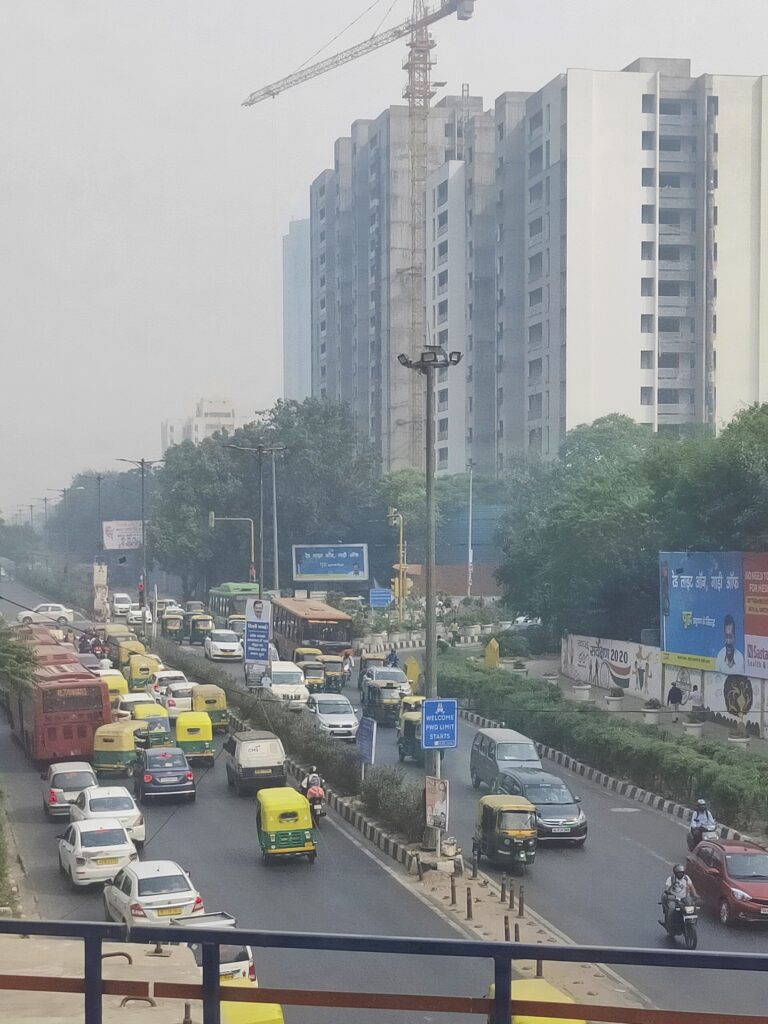
The highway between Delhi and Jaipur is wide and busy, with heavy truck traffic, roadside restaurants and fuel stations along the way. Your driver will know the best places to stop for a meal or a break. The slowest parts are usually getting out of Delhi and Gurgaon, and entering Jaipur, so an early start makes a noticeable difference.
A note on the vehicle rules for winter 2026–27
From 1 November 2026 to 31 January 2027, vehicles registered outside Delhi must meet the BS-VI emission standard to enter the city. A Delhi-registered car is not affected. If a car from Rajasthan or elsewhere is bringing you back to Delhi during this period, ask the company to confirm the vehicle is BS-VI compliant. I’ve explained this in more detail in visiting Delhi in November.
Choosing a car and driver
Book through your hotel, a reputable travel company or a trusted contact. Confirm the total price in advance and check exactly what it includes, such as tolls, parking, fuel and the driver’s allowance for meals and overnight stays. Make sure the car is air-conditioned, in good condition and suitable for your group and luggage.
Comparing train and car side by side
Journey time. The fastest trains take around four hours. By car, allow five to six hours, and more at weekends.
Comfort. Both are comfortable on the right service. The train is smoother and lets you read or rest; the car is more convenient door to door.
Cost. For one or two people, the train is usually cheaper. For a group, a car can work out similar or better value.
Flexibility. A car lets you choose your departure time and stop along the way.
Reliability. Trains are generally punctual outside the winter fog season, while road journeys depend heavily on traffic.
Which option should you choose?
One or two travellers: the train is usually the best choice. It’s quicker, calmer and good value.
Families and groups of three or more: a car with a driver gives you door-to-door comfort at a shared cost.
Golden Triangle travellers: a popular combination is a car from Agra to Jaipur, and then the train from Jaipur back to Delhi.
December and January travellers: keep your mornings flexible, as fog can delay early trains and slow road traffic.
Arriving in Jaipur
Jaipur Junction, the main station, is a short drive from the old city and most hotels. Outside the station you’ll find auto-rickshaws and taxis, and app-based taxis such as Uber and Ola operate in Jaipur. If you take an auto-rickshaw, agree the fare before you set off, or ask your hotel to arrange a pickup.
Choose your hotel location carefully. Staying in or near the old city, or in the central districts close to it, puts you within easy reach of the City Palace, Hawa Mahal and the bazaars. Amber Fort is about 11 kilometres outside the city, so you’ll need a car or taxi to get there.
What to see in Jaipur
Jaipur, the capital of Rajasthan, is known as the Pink City for the terracotta colour of its old town, painted in the nineteenth century to welcome a royal visitor. It’s one of India’s most attractive cities, with a rich history of Rajput kings, palaces and forts.
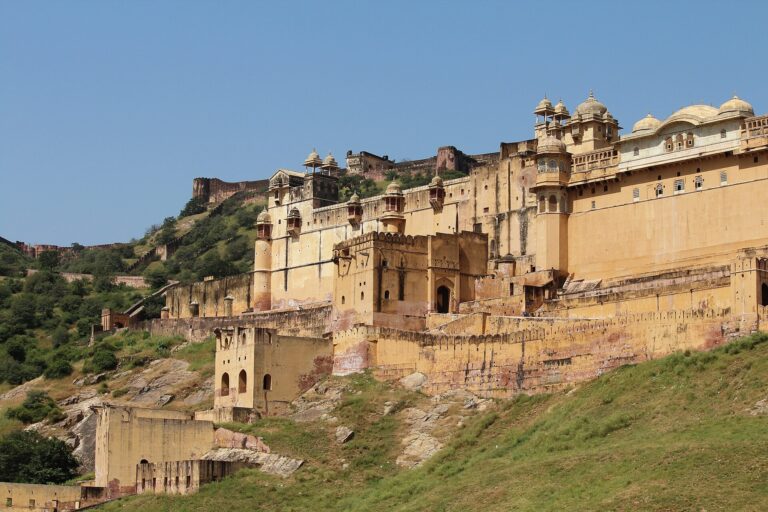
Amber Fort, on a hillside just outside the city, is the highlight for most visitors. Its courtyards, mirrored halls and ramparts take two to three hours to explore, and it’s best visited early in the morning before the heat and the crowds.
The City Palace, in the heart of the old city, is still partly the home of Jaipur’s former royal family, with museums, courtyards and beautifully decorated gateways.
Jantar Mantar, next to the City Palace, is an eighteenth-century astronomical observatory with giant stone instruments, recognised as a UNESCO World Heritage Site.
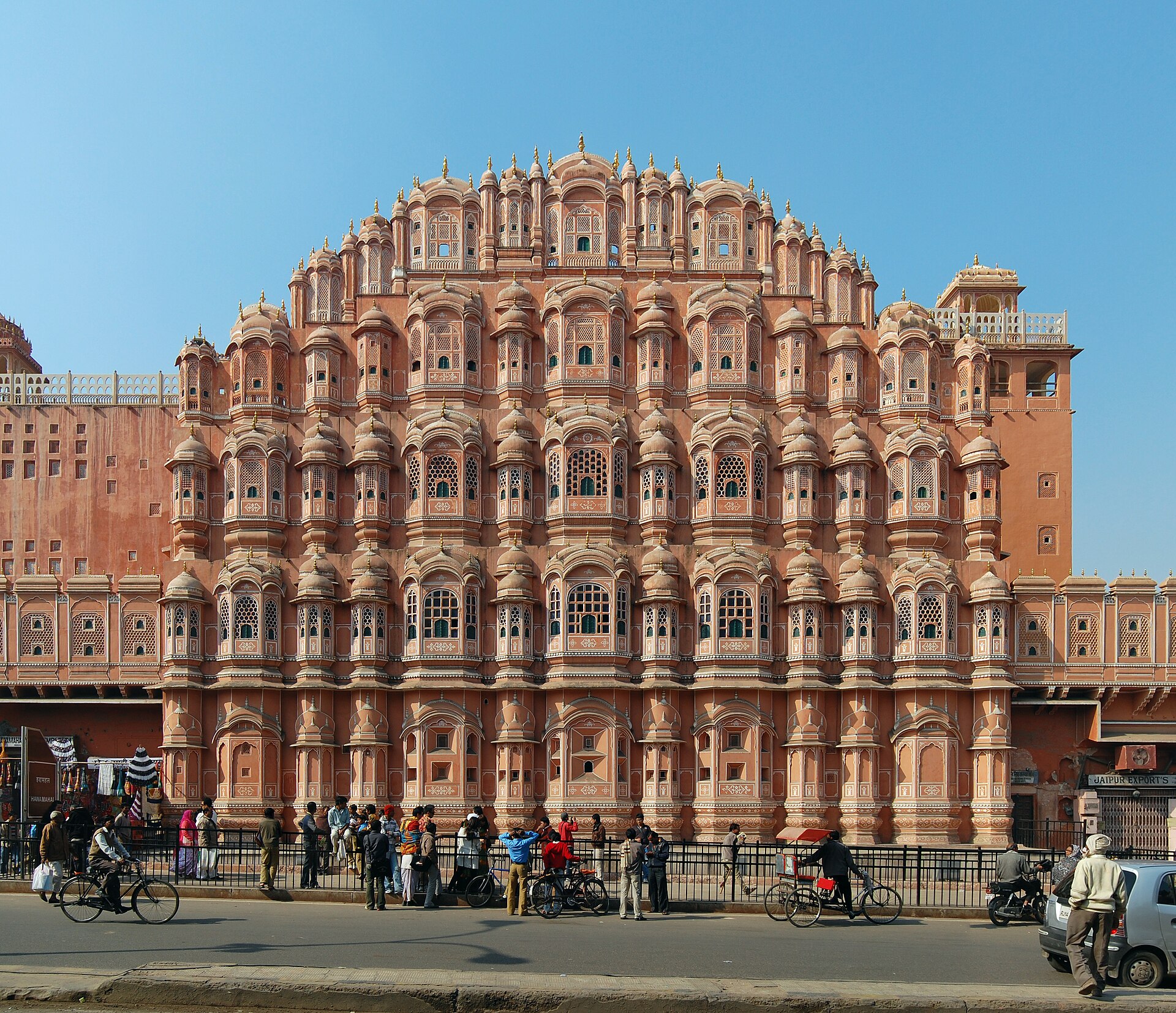
The Hawa Mahal, or Palace of Winds, has a striking pink façade with hundreds of small windows, built so that royal women could watch street life without being seen.
The old city bazaars are lively, colourful and full of colour, noise and history. Walking through them is one of the best ways to feel the character of the old city. They’re best explored in the late afternoon, when the light softens and the streets fill up.
With one full day, you can see Amber Fort in the morning and the old city in the afternoon. Two nights in Jaipur gives you a much more relaxed experience.
Where to stay in Jaipur
Jaipur has accommodation for every budget, and the right area depends on how you like to travel.
In or near the old city. Staying close to the walled Pink City puts you within walking distance of the City Palace, Jantar Mantar, the Hawa Mahal and the bazaars. It’s lively and atmospheric, though it can be noisy and congested.
Central districts such as C-Scheme and the area around MI Road. These are a short drive from the old city, with a good choice of hotels and restaurants, and they’re generally calmer.
Heritage hotels. Jaipur has many hotels in converted havelis, old mansions and former palaces. Staying in one is a memorable experience in itself, with courtyards, painted walls and traditional architecture.
Wherever you stay, remember that Amber Fort is outside the city, so you’ll need transport to reach it.
Eating in Jaipur
Rajasthani food is rich and distinctive, shaped by the dry climate and a tradition of dishes that keep well. Look out for dal baati churma, a combination of lentils, baked wheat balls and a sweet crumbly dessert; laal maas, a fiery red mutton curry; and gatte ki sabzi, gram-flour dumplings in a spiced yoghurt sauce. Jaipur is also known for its sweets and for pyaaz kachori, a spiced onion-filled pastry that’s a popular breakfast. As anywhere in India, choose busy places where food is freshly cooked; my street food guide explains how to eat safely.
Do you need a guide in Jaipur?
You can explore Jaipur on your own, and many visitors do. A guide is particularly helpful at Amber Fort and the City Palace, where the history is complex and much of the interest lies in the stories behind the buildings: the rival Rajput kings, the alliances with the Mughal emperors, and the daily life of the royal household. A guide also helps with tickets, timing and finding the quieter corners of busy sights.
How Jaipur fits into a wider trip
Jaipur is usually the third city of the Golden Triangle, after Delhi and Agra. I’ve explained how to divide your time in how many days the Golden Triangle needs, and compared the Delhi to Agra leg in Delhi to Agra by train or car.
If you have more time, Jaipur is also the gateway to the rest of Rajasthan, including Udaipur, Jodhpur and Jaisalmer. I’ve written about this in Rajasthan with a private guide.
When to go
October to March is the most comfortable time to visit Jaipur, with warm, sunny days and cool evenings. December and January nights can be quite cold. April to June is very hot, often over 40°C, and sightseeing is best done early and late in the day. The monsoon, from July to September, brings some rain and greener landscapes, with fewer visitors. For month-by-month detail, see the best time to visit Delhi, which applies closely to Jaipur as well.
Things that catch people out
Different Delhi stations. New Delhi, Delhi Cantonment and Delhi Sarai Rohilla are separate stations, a long way apart. Check which one your train uses and allow plenty of time to get there.
Weekend traffic. Road journeys on Friday evenings, weekends and public holidays can take considerably longer than usual.
Opening times. Some Jaipur sights close earlier than you might expect, and opening days can vary. Check before you plan your day.
People offering help. As in any tourist city, be wary of strangers who approach offering directions, special tickets or a “better” hotel. I’ve covered the most common tricks in Delhi tourist scams.
Want help planning your trip?
The best way to travel depends on your group, your dates and the rest of your route. If you’d like a local to look over your plan and suggest the best way to fit Jaipur in, my India trip planning calls are designed for exactly that. And if you’d like a guide with you on the journey, I work as a private tour guide across India.
Delhi to Jaipur: questions people ask me
What is the fastest way from Delhi to Jaipur?
The Vande Bharat Express, which takes around four hours. The Ajmer Shatabdi is slightly slower at a little over four hours.
How far is Jaipur from Delhi?
About 280 kilometres by road. The drive usually takes five to six hours, depending on traffic.
Which Delhi station do Jaipur trains leave from?
It depends on the train. Services leave from New Delhi, Delhi Cantonment or Delhi Sarai Rohilla, so check your ticket carefully.
Is it better to take the train or a car to Jaipur?
The train is usually best for one or two travellers. A car with a driver suits families, groups and anyone travelling from Agra.
Do I need to book Delhi to Jaipur trains in advance?
Yes. In the October to March season, book several weeks ahead, as popular trains sell out.
Can I visit Jaipur as a day trip from Delhi?
It’s possible, but it’s a very long day. Two nights in Jaipur lets you see the city properly.
If you’re planning Jaipur and would like a local’s view, message me on WhatsApp with your dates.

About the author
Ashish
Ashish is a Delhi-based tour guide, certified by India’s Ministry of Tourism under the Incredible India Tourist Guide (IITG) programme. He lives in Delhi, guides visitors from abroad in person, and writes practical, honest advice to help first-time travellers plan their trip to India.