Street Food in India for First-Timers: How to Eat Well and Stay Healthy
Street food is one of the great joys of travelling in India, and with a few simple habits most visitors enjoy it without any problems. Choose busy stalls with a quick turnover, eat food that’s cooked fresh and served hot in front of you, be careful with water, ice and raw foods that may have been washed in tap water, and ease in gently during your first few days. Most stomach upsets come from water and food that has been sitting out, not from the spices or the street itself.
I’m Ashish, a licensed tour guide based in Delhi. Some of my favourite moments with guests have been standing at a crowded stall in Old Delhi, watching someone taste a hot jalebi or a crisp, spicy chaat for the first time. I’ve also seen how nervous many visitors are about street food, often because of stories they’ve heard before they arrive. This guide explains how to enjoy it safely and what to try.
Why street food is worth trying
For millions of Indians, street food isn’t a novelty. It’s everyday food: breakfast on the way to work, a snack in the afternoon, a quick dinner with friends. Many of the best-loved stalls have been run by the same families for generations, perfecting a single dish. Eating at them gives you a taste of local life that’s very different from a hotel restaurant, and often a chance to chat with the cooks and other customers.
Street food is also remarkably varied. Every region, and often every city, has its own specialities, from the chaat and parathas of Delhi to the vada pav of Mumbai and the dosas of the south. Trying them is one of the best ways to understand the diversity of India.
Common myths about street food
“Spicy food will make you ill.” Spice doesn’t cause food poisoning. Very hot food may upset a sensitive stomach temporarily, but the real risks are contaminated water and food that has been left out. In fact, freshly fried, spicy street food is often safer than a lukewarm buffet.
“Only expensive restaurants are safe.” Price isn’t a reliable guide. A busy street stall cooking fresh food in front of you can be safer than an empty restaurant where dishes have been sitting in the kitchen for hours.
“Vegetarian food is always safer.” Vegetarian dishes are not automatically safer. Raw garnishes, chutneys and dairy products can carry risks too. What matters most is freshness and how the food has been handled.
“Everyone gets sick in India.” Many visitors do have a mild stomach upset at some point, but plenty don’t, and serious illness is uncommon among travellers who follow sensible precautions.
How to choose a good stall
Choosing the right place is the single most important thing you can do.
Look for crowds. A stall busy with local customers is the best sign of all. High turnover means food is cooked and eaten quickly rather than left sitting, and locals know which places are good and reliable.
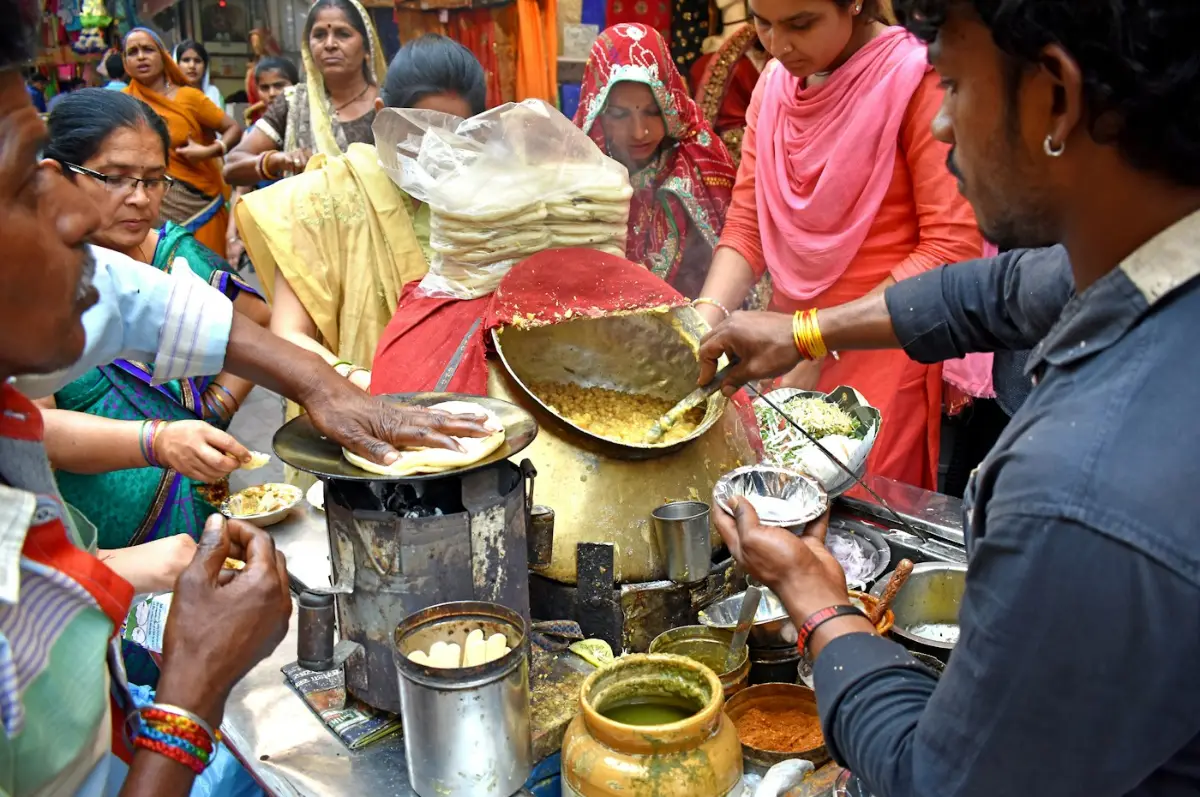
Watch the food being cooked. Choose dishes that are cooked fresh and served hot in front of you, such as fried snacks, griddle breads, kebabs and dishes straight from the pan. Heat kills most germs.
Look at the general cleanliness. No street stall is spotless, but look for clean utensils, covered ingredients, fresh oil rather than dark, reused oil, and a cook who handles money and food separately, or uses a helper for one or the other.
Be cautious with food that has been sitting out. Pre-cooked dishes kept at room temperature for hours, especially in hot weather, carry more risk than food cooked to order. Plates matter too: stalls that serve on fresh leaf plates or disposable bowls avoid the risk of dishes rinsed in a bucket of reused water.
Water, ice and drinks
Water is the most common cause of stomach problems for visitors, so it deserves particular care.
Drink bottled or filtered water. Check that the seal on bottled water is intact. Many hotels provide filtered drinking water, and refilling your own bottle helps reduce plastic waste.
Be careful with ice. Ice in good restaurants and hotels is usually made from filtered water, but ice at street stalls may not be. If in doubt, ask for drinks without ice.
Choose hot drinks freely. Masala chai, made by boiling tea leaves with milk, sugar and spices, is safe because it’s boiled, and it’s one of the great pleasures of India.
Be careful with fresh juices and lassi. These can be delicious, but they may be made with tap water or ice, or with fruit that has been cut and left sitting. Choose busy, well-regarded places, or enjoy them in restaurants.
Fruit, salads and chutneys
Raw foods carry more risk than cooked ones, because they may have been washed in tap water.
Fruit that you peel yourself, such as bananas, oranges and mangoes, is generally safe. Pre-cut fruit sold on the street, salads and raw vegetable garnishes are best avoided in your first few days. Fresh chutneys, particularly green coriander and mint chutney, are often made with raw herbs and water, so it’s worth being cautious with these at first. The same applies to pani puri, the popular crisp shells filled with spiced water, which is delicious but best saved for later in your trip and for very busy, well-known stalls.
Ease in gently
Give your stomach a few days to adjust to new food, new spices and new bacteria. In your first couple of days, choose cooked dishes from busy, well-known places, and save the more adventurous snacks for later in your trip. Eat smaller portions, and avoid having too many rich or very spicy dishes in one go.
What to try in Delhi
Delhi is one of India’s great street-food cities, and Old Delhi in particular is famous for its food. Here are some dishes worth looking out for.
Chaat. A family of tangy, spicy, crunchy snacks, usually combining crisp fried pastry, potatoes, chickpeas, yoghurt and chutneys. Papdi chaat, aloo tikki and dahi bhalla are popular versions.
Parathas. Flaky griddle breads, often stuffed with potato, paneer, vegetables or sweeter fillings, and fried in ghee. Old Delhi has a whole lane historically known for them.
Chole bhature. Spiced chickpeas served with large, puffy fried bread. Rich, filling and very popular for breakfast or lunch.
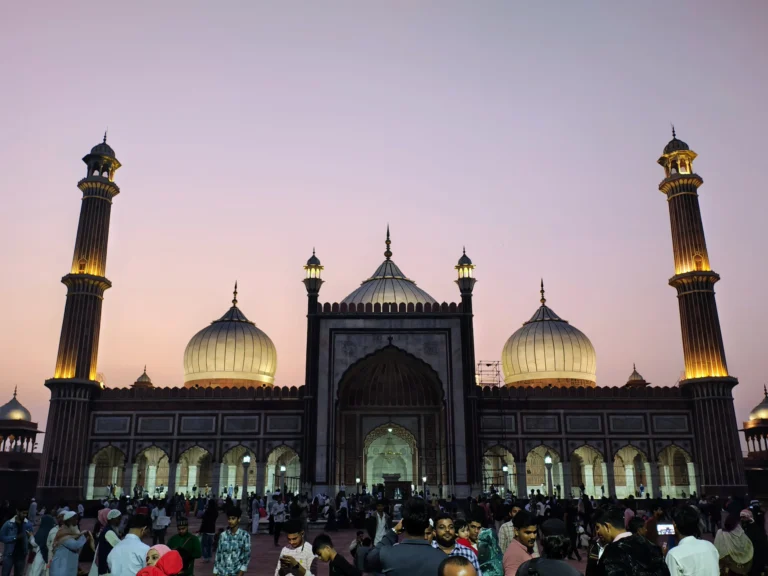
Kebabs and Mughlai dishes. The area around Jama Masjid is famous for kebabs, curries and other dishes influenced by Mughal cooking.
Jalebi. Spirals of batter fried and soaked in sugar syrup, best eaten hot and crisp.
Kulfi. Dense, creamy traditional ice cream, often flavoured with cardamom, saffron or pistachio. Because it’s made with milk, choose busy, well-known shops.
Daulat ki chaat. A delicate, airy winter speciality of Old Delhi, made from whipped milk and sold only in the cooler months, often early in the morning.
Samosas and pakoras. Fried pastries filled with spiced potato and peas, and vegetable fritters in gram-flour batter, sold hot from the pan across the city.
Masala chai. Spiced milk tea, served in small cups or clay pots, at almost every street corner.
Street food across India
Every region of India has its own street-food traditions, and trying them is one of the pleasures of travelling around the country.
Mumbai is famous for vada pav, a spiced potato fritter in a soft bun, often called Mumbai’s burger, and pav bhaji, a buttery vegetable mash served with bread. Bhel puri, a crunchy puffed-rice snack, is a favourite on the beaches.
Kolkata is known for kathi rolls, flatbreads wrapped around spiced fillings, and for puchka, its version of the crisp, water-filled pani puri found across India.
South India offers dosas, thin fermented rice and lentil pancakes, idlis, soft steamed rice cakes, and vadas, savoury lentil doughnuts, all served with coconut chutney and sambar.
Rajasthan has pyaaz kachori, a flaky pastry filled with spiced onion, and mirchi vada, a large chilli stuffed with potato and fried.
Lucknow, in Uttar Pradesh, is renowned for its delicate kebabs and rich, slow-cooked dishes from the Awadhi tradition.
Varanasi is known for kachori sabzi for breakfast, tamatar chaat and thick lassi served in clay cups.
Where and when to eat in Old Delhi
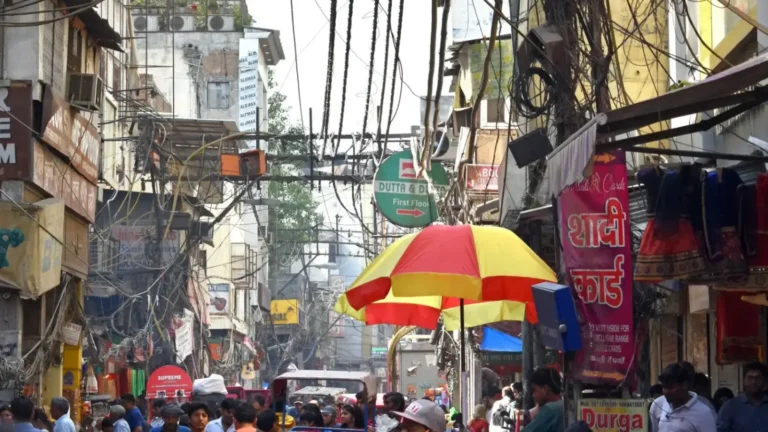
Old Delhi is at its liveliest for food in the late morning and evening, when the most popular stalls are cooking at full speed. Many stalls specialise in a single dish and have been in the same spot for decades. The lanes around Chandni Chowk, the area near Jama Masjid and the parathas lane are all well known. Some places close on certain days, and many of the busiest areas are very crowded, so it’s worth going with someone who knows the lanes, at least the first time.
During the Islamic holy month of Ramadan, the area around Jama Masjid comes alive after sunset, when people break their fast, and the evening food scene is especially vibrant.
Street food through the seasons
The season affects which foods are best and which precautions matter most. In summer, from April to June, food spoils faster in the heat, so be especially careful with anything that isn’t freshly cooked, and drink plenty of safe water. It’s also the season for mangoes, sugar-cane juice and cooling drinks such as nimbu pani, a fresh lime drink; enjoy these from busy, reputable places. In the monsoon, from July to September, hot fried snacks such as pakoras and samosas with chai are a favourite, but water-borne illness is more common, so extra care with water is wise. In winter, Delhi’s food is at its richest, with hot parathas, sweets such as gajar ka halwa, a carrot pudding, and steaming cups of chai.
Street food with children and older travellers
Children and older travellers can enjoy street food too, with a little extra care. Choose simple, mild, freshly cooked dishes such as parathas, dosas, plain fried snacks and sweets, and avoid raw garnishes and chutneys. Make sure everyone washes their hands or uses sanitiser before eating, and keep oral rehydration salts in your bag. I’ve written more in India with kids and travelling India with elderly parents.
Food etiquette and practical tips
Eat with your right hand. In India, the right hand is traditionally used for eating, and the left for other purposes. Many street foods are eaten by hand, so wash your hands or use hand sanitiser before you eat.
Carry small change. Street food is inexpensive, and many vendors can’t change large notes.
Carry tissues and hand sanitiser. Napkins aren’t always available.
Ask about spice. If you’re sensitive to chilli, ask for less spice. Many vendors will adjust if they can.
Be aware of dietary needs. Much Indian street food is vegetarian, and Delhi has a long vegetarian tradition. If you have allergies, especially to nuts, dairy or gluten, be cautious, as ingredients aren’t always obvious and vendors may not understand specific allergy questions.
Street food or restaurants?
You don’t have to choose one or the other. Many visitors eat in restaurants for most meals and try street food for snacks and special experiences, which is a sensible balance, especially early in a trip. Delhi also has many simple, inexpensive eateries, known as dhabas, that serve freshly cooked local food in a slightly more comfortable setting than a street stall. These can be a good middle ground. Some well-known Old Delhi establishments have been serving the same dishes for generations and offer seating, which makes them a comfortable introduction to the area’s food.
What to do if you get an upset stomach
Despite your best efforts, some visitors do get an upset stomach, especially in the first week. Most cases are mild and pass within a day or two.
Rest, drink plenty of safe water, and use oral rehydration salts, which are widely available at pharmacies and well worth packing before you travel. Eat plain, simple food, such as rice, toast, bananas and plain yoghurt, until you feel better. If you have a high fever, blood in your stool, severe pain, or symptoms that last more than a couple of days, see a doctor. Your hotel can usually recommend one, and India’s major cities have excellent private clinics and hospitals.
It’s always wise to travel with good travel insurance that includes medical cover, and to speak to your doctor or a travel clinic before your trip about any vaccinations or medicines you might need.
Exploring street food with a guide
If you’re nervous about street food, or simply want to try the best dishes without guesswork, exploring with a local guide is a good way to start. A guide knows which stalls are trusted by local people, which dishes are safest for first-timers, and how to order without confusion. It also lets you try a wider variety in a single outing, sharing small portions as you go.
I run a small Chandni Chowk food walk through the lanes of Old Delhi, and I also include food stops on my wider guided days as a private tour guide across India.
More advice for your trip
Food is just one part of staying healthy and comfortable in India. For an honest overview of safety, see is India safe for tourists. For packing advice, including what to bring for your health, see my India packing list. And if you’re planning your first visit, my guide on how to plan a trip to India covers the whole process. If you’d like personal advice, my India trip planning calls are designed for exactly that.
Street food in India: questions people ask me
Is street food in India safe for tourists?
Usually, yes, if you choose busy stalls, eat food that’s cooked fresh and served hot, and are careful with water, ice and raw foods.
What is the most common cause of stomach problems in India?
Contaminated water and ice, and food that has been left sitting out, rather than spices or freshly cooked street food.
Should I avoid street food during my first few days?
Not entirely, but ease in gently. Choose simple cooked dishes from busy, well-known places, and save more adventurous snacks for later.
Is masala chai safe to drink?
Yes. It’s boiled during preparation, which makes it one of the safest street drinks.
What should I eat in Old Delhi?
Try chaat, parathas, chole bhature, kebabs near Jama Masjid, hot jalebis and kulfi.
What should I do if I get an upset stomach?
Rest, drink safe water with oral rehydration salts and eat plain food. See a doctor if symptoms are severe or last more than a couple of days.
If you’d like to explore Delhi’s food with a local, message me on WhatsApp.

About the author
Ashish
Ashish is a Delhi-based tour guide, certified by India’s Ministry of Tourism under the Incredible India Tourist Guide (IITG) programme. He lives in Delhi, guides visitors from abroad in person, and writes practical, honest advice to help first-time travellers plan their trip to India.