What to Wear in Delhi: A Practical Guide for Every Season
The best clothes for Delhi are loose, lightweight and modest: trousers or long skirts, tops that cover your shoulders, and a large scarf, worn with comfortable shoes that slip on and off easily. This kind of clothing keeps you comfortable in the heat, makes visiting temples, mosques and gurudwaras straightforward, and helps you blend in, especially in Old Delhi and other traditional areas. Adjust for the season: warm layers from December to February, the lightest breathable fabrics from April to June, and quick-drying clothes during the monsoon.
I’m Ashish, a licensed tour guide based in Delhi. The right clothes can make a day of sightseeing in Delhi much easier, and the wrong ones can make it surprisingly uncomfortable. Delhi is a modern, cosmopolitan city, and you’ll see every style of dress here, from traditional saris to the latest Western fashion, but a few simple choices make a real difference to how comfortable you feel and how easily you can visit the city’s religious and historic sites. This guide explains what to wear, why, and how it changes through the year.
Why clothing matters in Delhi
Delhi is a large, diverse city with a wide range of dress styles. In upmarket neighbourhoods and restaurants, you’ll see young Indians in jeans, dresses and Western fashion. In Old Delhi and at religious sites, people tend to dress more conservatively.
As a visitor, dressing modestly isn’t a strict requirement in most places, but it has several practical benefits. It’s respectful in religious and traditional areas, where covering your shoulders and knees is expected. It reduces unwanted attention, particularly for women. And loose clothing that covers your skin protects you from the strong sun, dust and mosquitoes, often keeping you cooler than shorts and vest tops.
The basics: what works year-round
Loose trousers or long skirts. Lightweight cotton or linen trousers, palazzo pants, or long skirts are comfortable and practical. Jeans are fine in the cooler months but hot in summer.
Tops that cover the shoulders. T-shirts, loose shirts, blouses and tunics with short or long sleeves work well. Avoid very low necklines and sleeveless tops, especially in Old Delhi and at religious sites.
A large scarf or stole. This is the most versatile item you can bring. Use it to cover your head at a gurudwara or mosque, your shoulders at a temple, or your face against dust and sun. It also keeps you warm on cool evenings and in air-conditioned spaces.
Comfortable slip-on shoes. You’ll remove your shoes at temples, mosques and gurudwaras, sometimes several times a day. Most religious sites have a free or inexpensive shoe deposit counter near the entrance, where your shoes are kept safely while you visit. Slip-on shoes or sandals with good support are ideal. Expect to walk on uneven pavements and busy streets, so comfort matters.
Sun protection. A hat and sunglasses are useful for much of the year. The sun in Delhi is strong even in winter, so sunscreen is worth packing whatever the season.
What women can wear
Women visiting Delhi often ask what’s appropriate. Loose trousers or long skirts, with tops that cover the shoulders and don’t reveal cleavage, are comfortable and widely accepted. A large scarf is particularly useful. Many women visitors enjoy wearing Indian clothing, such as a kurta, a long tunic worn over trousers, which is comfortable and practical.
In modern areas such as Connaught Place, Khan Market, Hauz Khas and South Delhi, you’ll see a wider range of styles, and knee-length dresses or skirts are common. However, more modest clothing is advisable in Old Delhi, at religious sites, on public transport and in crowded markets.
Dressing modestly noticeably reduces staring and unwanted attention. I’ve written more on this in Delhi for solo women travellers.
What men can wear
Men have a little more flexibility, but similar principles apply. Long trousers are better than shorts, especially at religious sites, where shorts may not be allowed. Short-sleeved shirts and T-shirts are fine, though sleeveless vests are best avoided in public. A light scarf or handkerchief is useful for covering your head at gurudwaras, and a kurta is a comfortable, cool option that many male visitors enjoy wearing.
Dressing for religious sites
Delhi has many important religious sites, and each has its own customs.
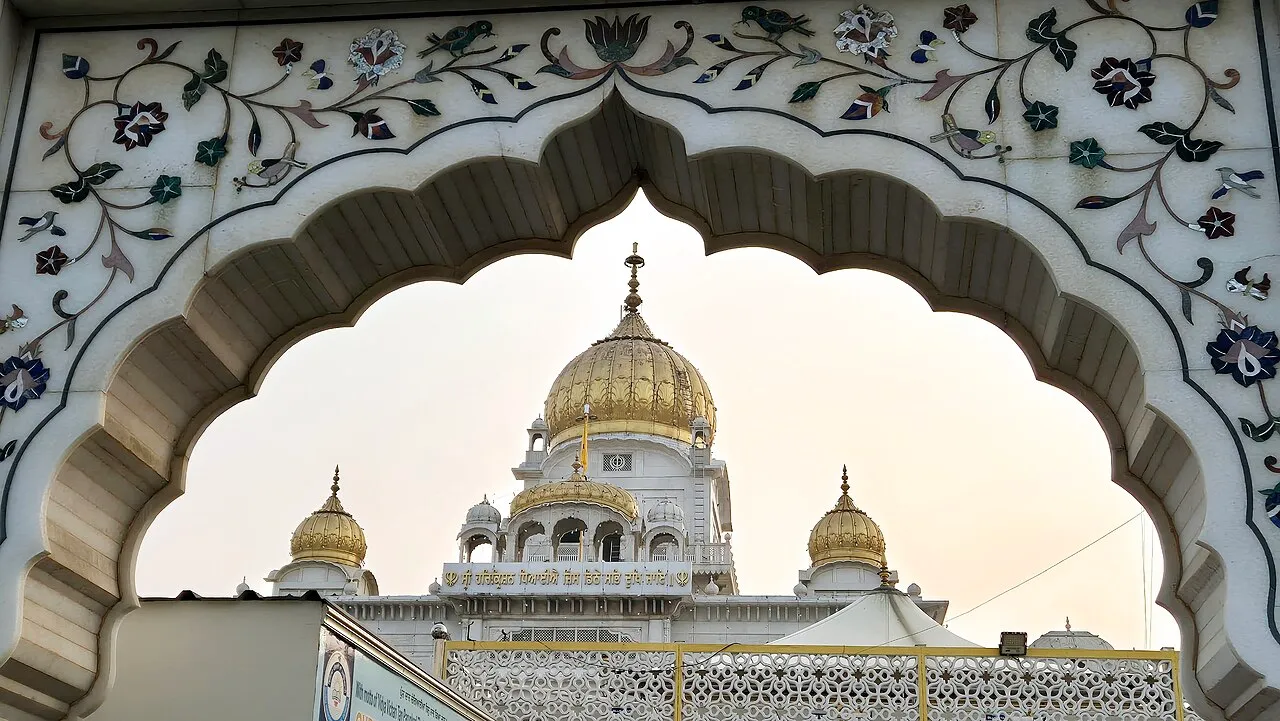
Gurudwaras (Sikh temples), such as Bangla Sahib: everyone, men and women, must cover their head. Scarves are usually available at the entrance. Shoes are removed and feet are washed before entering. Shoulders and knees should be covered.
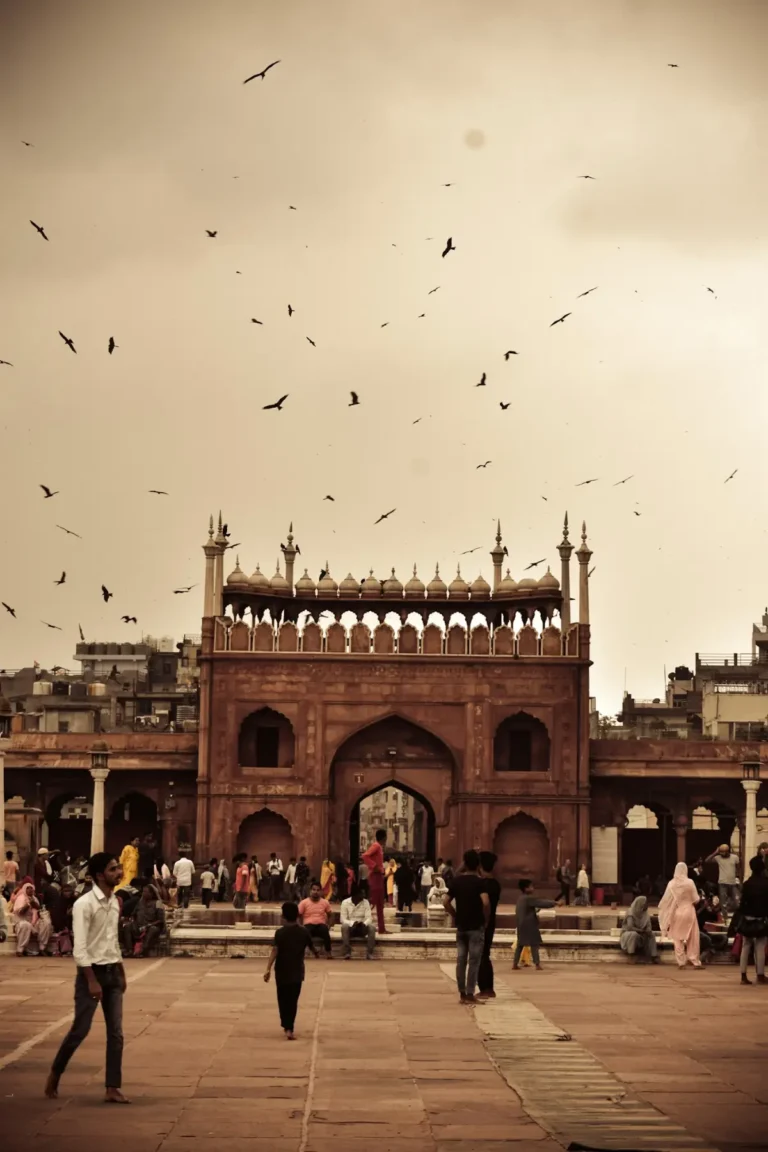
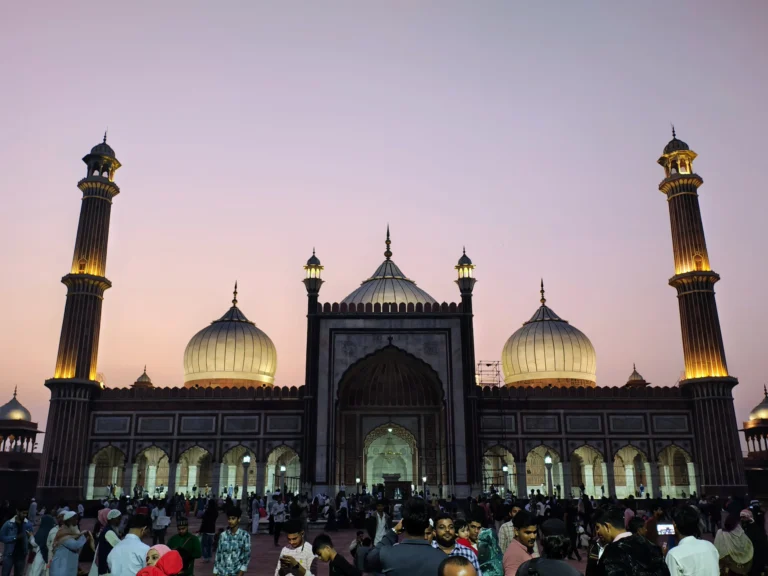
Mosques, such as Jama Masjid: modest clothing covering arms and legs is expected. Women are usually asked to cover their heads and may be given a robe to wear over their clothes. Shoes are removed before entering the prayer area.
Hindu and Jain temples: shoes are removed, and modest clothing is expected. Some temples don’t allow leather items, such as belts and bags, inside.
Other places of worship, such as the Lotus Temple and churches: modest clothing is appropriate, and shoes may need to be removed.
Carrying a scarf and wearing shoes that are easy to remove makes visiting all of these places simple. Socks can be useful, as stone floors can be very hot in summer and cold in winter.
Season by season
Winter: December to February
Delhi is genuinely cold in winter, especially at night and in the early morning, when temperatures can fall close to freezing. Afternoons are often sunny and pleasant. Many buildings aren’t well heated.
Bring a warm jacket, jumpers, thermal layers if you feel the cold, warm socks and closed shoes. Delhi’s locals bundle up in shawls, sweaters and woollen caps on winter mornings, and you’ll soon understand why. Layers are key, as you’ll want to remove them as the day warms up. A warm scarf, hat and gloves are useful for early mornings. If you’re sensitive to air pollution, bring good-quality masks.
Spring: late February to March
The weather is warm and pleasant, with cool mornings and evenings. Light clothing for the day and a light jacket or long-sleeved top for the evening are ideal. If you’ll be in Delhi for Holi, bring an old outfit you’re happy to throw away; see Holi 2027 in India.
Summer: April to June
Delhi is extremely hot in summer, often over 40°C. Wear your lightest, loosest clothing in breathable natural fabrics such as cotton and linen, in light colours that reflect the sun. Long, loose sleeves protect your skin from the sun and can actually feel cooler than bare arms. A wide-brimmed hat, sunglasses and high-factor sunscreen are essential.
Monsoon: July to September
The monsoon brings rain and high humidity. Quick-drying clothes are best, as cotton can take a long time to dry. A compact umbrella, waterproof sandals with good grip, and a waterproof bag for your phone are useful. Avoid long trousers that drag in puddles; cropped trousers or a knee-length kurta over leggings work well. Insect repellent becomes especially important during and after the rains.
Autumn: October to November
The weather is warm during the day and cooler in the evenings. Light clothes and a light jumper for the evening work well. November often has poor air quality, so consider bringing masks. See visiting Delhi in November.
Understanding Indian clothing
Knowing a little about traditional Indian clothing helps you understand what you’ll see around you, and many visitors enjoy trying it.
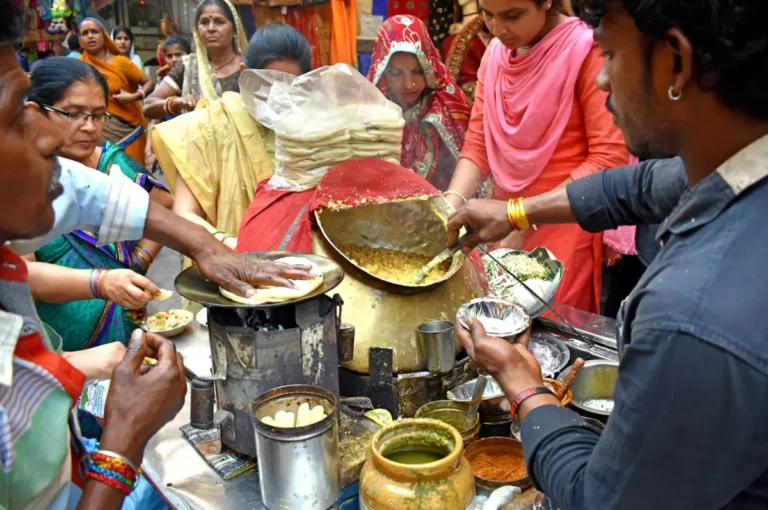
The sari is a long length of fabric, usually around five to nine metres, draped elegantly around the body and worn with a fitted blouse. It’s worn by many women, especially for work, festivals and special occasions.
The salwar kameez consists of a long tunic, the kameez, worn over loose trousers, the salwar, often with a matching scarf called a dupatta. It’s comfortable, practical and very common in north India.
The kurta is a long, loose tunic worn by both men and women, often over trousers or jeans. It’s one of the easiest and most comfortable pieces for visitors to wear.
For men, traditional clothing includes the kurta pyjama, a long tunic with loose trousers, and for formal occasions, the sherwani, a long, embroidered coat.
Wearing Indian clothing as a visitor is generally seen as a friendly and respectful gesture.
Fabrics and colours
Natural fabrics, especially cotton and linen, are the most comfortable choice for most of the year, as they breathe well in the heat. Light colours reflect the sun and are cooler in summer, while slightly darker or patterned fabrics hide dust and stains, which is useful on long days of sightseeing. Synthetic fabrics can feel hot and sticky in humid weather. In winter, wool and fleece layers work well.
Accessories and bags
A small cross-body bag or daypack that closes securely is ideal for sightseeing and crowded markets. Leave expensive watches and jewellery at home. Sunglasses, a hat and a refillable water bottle are useful for most of the year. If you wear glasses, bring a spare pair. In winter, a warm hat and gloves are useful for early mornings.
Dressing for trips beyond Delhi
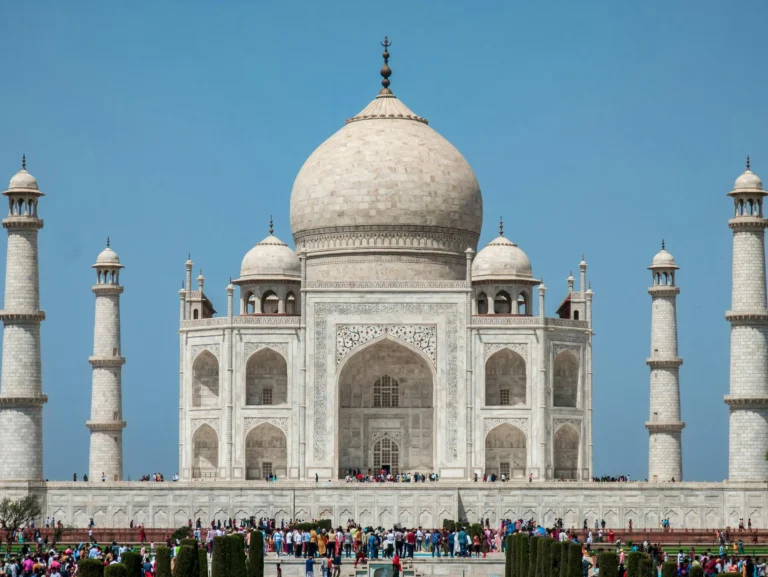
The same principles apply across north India. In Agra, the Taj Mahal involves a lot of walking in the sun, often barefoot or in shoe covers on hot marble, so comfortable, breathable clothes and a hat are important. In Jaipur and Rajasthan, modest clothing is appreciated, and desert nights can be cold in winter. In Varanasi, the holiest city in Hinduism, modest dress is particularly important, and mornings by the river can be chilly. See Varanasi for first-timers and Rajasthan with a private guide.
Dressing for different activities
Sightseeing at monuments. Comfortable, breathable clothes, good walking shoes, a hat and sunscreen. Many monuments involve a lot of walking, often in the sun, and sites such as Humayun’s Tomb and the Qutub Minar have large open grounds with little shade.
Old Delhi and markets. Modest clothing, comfortable closed or secure shoes for crowded, uneven lanes, and a bag that closes securely.
Restaurants and evenings out. Delhi’s upmarket restaurants and bars are generally smart casual. Some places have dress codes, so check in advance.
Weddings and formal events. If you’re invited to an Indian wedding, bright colours and Indian dress are welcome, though it’s best to avoid white and black, which are associated with mourning in some communities. Indian weddings are colourful, glamorous occasions, and guests usually dress up.
Dressing children
Children have more flexibility, but similar principles help. Light, breathable cotton clothes that cover their shoulders and knees protect them from the sun and mosquitoes and are suitable for temples. Sun hats, sunglasses and comfortable shoes that are easy to take off are essential. Bring warm layers for winter mornings and a spare set of clothes for messy days. See India with kids.
Laundry while travelling
You don’t need to pack clothes for every day of your trip. Most hotels offer an inexpensive laundry service, often with same-day or next-day return, and many neighbourhoods have small local laundries. Packing a few versatile pieces and washing them regularly makes travelling much easier and leaves room in your luggage for anything you buy along the way.
Common clothing mistakes
Packing only summer clothes for a winter trip. Many visitors are surprised by how cold Delhi gets from December to February.
Wearing shorts and sleeveless tops to religious sites. You may be refused entry or asked to cover up.
Bringing shoes that are hard to remove. Lace-up boots become tiresome when you’re removing them several times a day.
Choosing synthetic fabrics for summer. They trap heat and become uncomfortable in humid weather.
Forgetting a scarf. It’s the most useful item in any traveller’s bag in Delhi.
What to leave at home
Very short shorts, mini-skirts, crop tops and low-cut or see-through tops can make visiting religious and traditional areas difficult and attract unwanted attention. Heavy jeans are uncomfortable in summer. Expensive jewellery is best left at home. And bring fewer shoes than you think you’ll need; two or three comfortable pairs are plenty.
For a complete list of what to bring, see my India packing list by season.
Want help planning your trip?
If you’d like advice on your trip as a whole, from when to go to what to pack, my India trip planning calls are designed for exactly that. And if you’d like a local guide in Delhi, I work as a private tour guide across India.
What to wear in Delhi: questions people ask me
What should I wear in Delhi?
Loose, lightweight clothing that covers your shoulders and knees, a large scarf, and comfortable shoes that slip on and off easily.
Can women wear shorts in Delhi?
It’s best to avoid shorts in Old Delhi, at religious sites and on public transport. In some modern areas, knee-length clothing is more common, but modest clothing is generally more comfortable.
Do I need to cover my head in Delhi?
At gurudwaras, everyone covers their head, and women are usually asked to cover their heads at mosques. A scarf makes this easy.
What should I wear in Delhi in winter?
Warm layers, including a jacket, jumper, warm socks and closed shoes, as mornings and nights can be very cold.
What should I wear in Delhi in summer?
Light, loose cotton or linen clothing in light colours, a wide-brimmed hat, sunglasses and sunscreen.
One Comment