Holi 2027 in India: Date, Where to Celebrate and How to Enjoy It Safely
Holi 2027 falls on Monday 22 March, with Holika Dahan, the bonfire night that begins the festival, on the evening of Sunday 21 March. Holi is the festival of colours, when people across north India throw coloured powder and water at friends, family and strangers, and the streets fill with music, laughter and celebration. The most famous traditional celebrations take place in Mathura, Vrindavan and the nearby villages, where festivities begin days before the main date. Delhi and Jaipur also celebrate enthusiastically and are easier to reach. With a little preparation, Holi can be one of the most joyful experiences of a trip to India.
I’m Ashish, a licensed tour guide based in Delhi. Holi is one of my favourite days of the year, and visitors who know what to expect usually enjoy it far more than those who arrive unprepared. This guide explains what Holi is, where to celebrate, how to stay safe and comfortable, and how to plan your trip around it.
What is Holi?
Holi is one of India’s most important and joyful Hindu festivals. It marks the end of winter and the arrival of spring, and it celebrates the victory of good over evil. It’s also a time for forgiveness, renewing relationships and setting aside social differences, at least for a day.
The festival is connected with several stories from Hindu tradition. The best known is the legend of Prahlad, a devotee of Lord Vishnu, and his aunt Holika. According to the story, Holika tried to kill Prahlad by sitting with him in a fire, believing she was protected from flames. Instead, Holika was burned and Prahlad survived, symbolising the triumph of devotion and good over evil. This is the origin of the Holika Dahan bonfires lit the night before Holi.
Holi is also closely associated with Lord Krishna, who is said to have playfully coloured the face of his beloved Radha and the other gopis, or cowherd girls, in the region around Mathura and Vrindavan. That’s why celebrations there are so elaborate and long-lasting.
Although Holi is a Hindu festival, it’s celebrated by people of many backgrounds across north India, and visitors are almost always welcome to join in. It’s also celebrated by Indian communities around the world, from the UK to the Caribbean.
The date of Holi 2027
Holi follows the Hindu lunar calendar and falls on the full moon day of the month of Phalguna, usually in March. In 2027:
- Holika Dahan, the bonfire night: Sunday 21 March 2027, in the evening.
- Holi, the day of colours: Monday 22 March 2027.
In some places, celebrations begin several days earlier, especially in the Braj region around Mathura and Vrindavan. Exact local dates for these early events vary each year, so check closer to the time if you’re planning to attend them. In a few parts of India, the main day of colours may also be celebrated on a slightly different date, so confirm locally if you’re travelling outside the north.
What happens on Holi
Holika Dahan
On the evening before Holi, communities gather around bonfires built in neighbourhoods, villages and temple grounds. People pray, walk around the fire, and make offerings, such as grains, coconuts and sweets. It’s a gentler, more spiritual start to the festival, and a good opportunity to see a traditional ritual. Some families roast fresh grains or green chickpeas in the fire, symbolising the new harvest, and ash from the bonfire is sometimes taken home as a blessing.
The day of colours
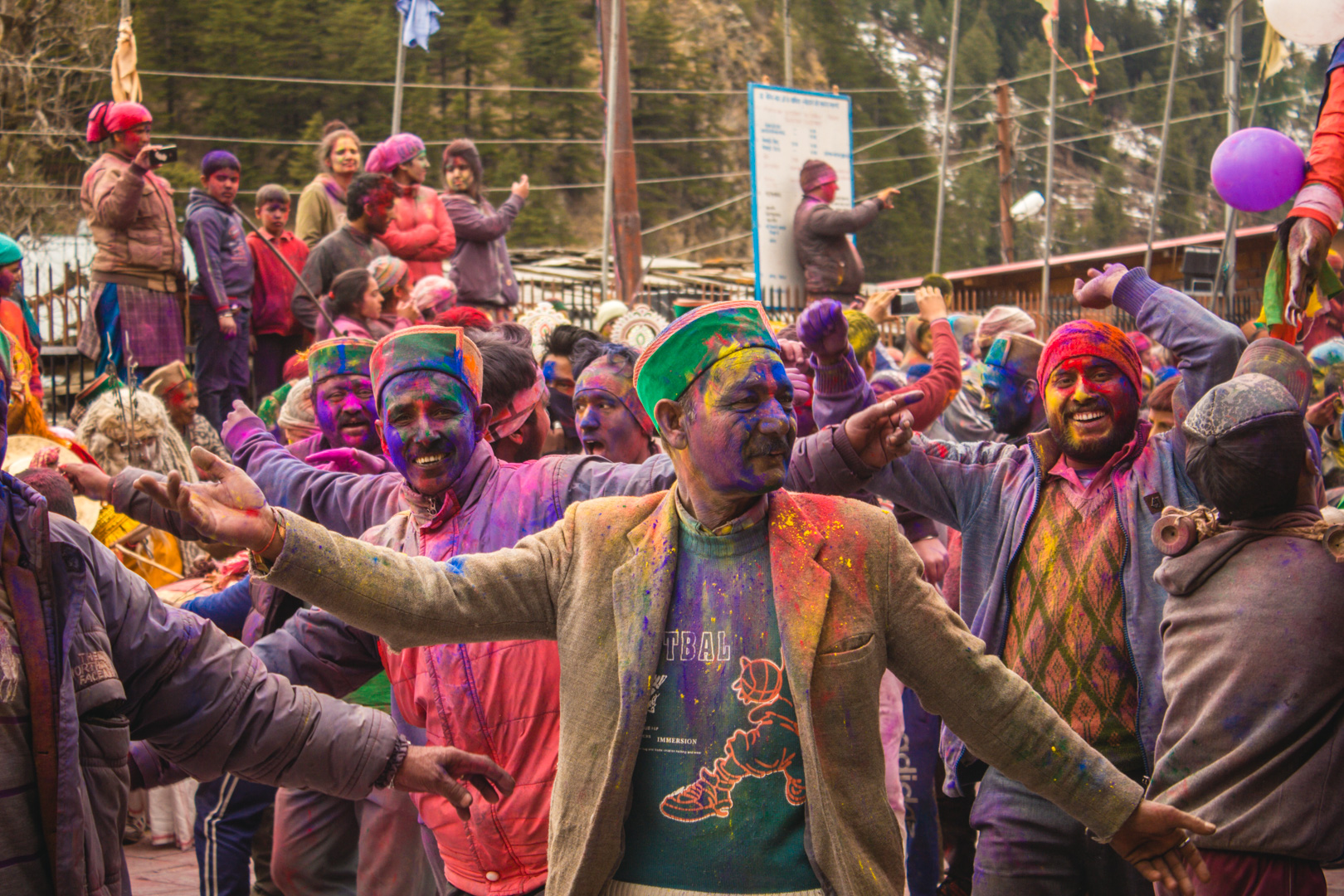
On the morning of Holi, the celebrations begin. People go out into the streets, courtyards and parks with packets of coloured powder, called gulal, and water pistols, known as pichkaris. They smear colour on each other’s faces, throw powder in the air, spray coloured water, dance to music and share sweets and drinks. Children love it, and adults often enjoy it just as much. Music plays from loudspeakers, people dance to traditional Holi songs, and drums often accompany groups moving from house to house.
The colourful celebrations usually take place in the morning and continue until around early afternoon. After that, people go home, wash off the colour, change into clean clothes and spend the rest of the day visiting friends and family, exchanging greetings and enjoying festive food.
Where to celebrate Holi
Mathura and Vrindavan
The Braj region, around Mathura and Vrindavan in Uttar Pradesh, is associated with the life of Lord Krishna, and its Holi celebrations are the most famous in India. Festivities here begin about a week before Holi and include several distinctive traditions.
Lathmar Holi takes place in the villages of Barsana and Nandgaon. According to tradition, women playfully beat men with sticks, called lathis, while the men protect themselves with shields, re-enacting a legend involving Krishna and Radha.
Phoolon wali Holi, or flower Holi, is celebrated at the Banke Bihari temple in Vrindavan, where priests shower devotees with flower petals instead of coloured powder.
Widows’ Holi in Vrindavan has become a moving symbol of social change, as widows, traditionally excluded from celebrations, now join in the festivities.
These celebrations are extraordinary, but they’re also extremely crowded and can be intense, especially for first-time visitors. If you plan to go, I’d strongly recommend going with a guide or an organised group.
Delhi
Delhi celebrates Holi enthusiastically across the city. In residential neighbourhoods, families and friends gather in courtyards and streets. Many hotels, clubs and event organisers host Holi parties with music, food, organic colours and a more controlled environment, which are often a good choice for visitors celebrating for the first time.
Jaipur
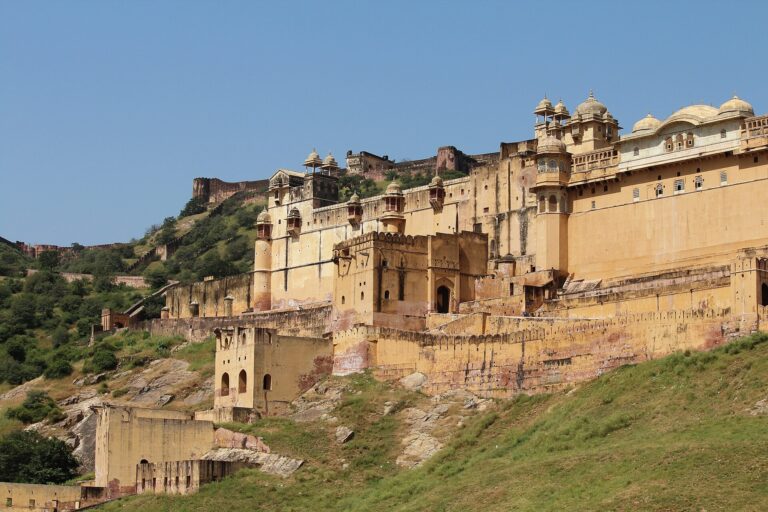
Jaipur celebrates Holi with warmth and colour. Many hotels organise celebrations for guests, and the city’s festive atmosphere makes it a lovely place to experience the festival.
Other places
Holi is also celebrated vibrantly in Varanasi, Pushkar and Udaipur. In Udaipur, the royal family traditionally hosts a Holika Dahan ceremony at the City Palace. Some celebrations, particularly in Varanasi and Pushkar, can be very lively and are better suited to experienced travellers.
Holi food and drinks
Food is a big part of Holi. Families prepare sweets and snacks in the days before the festival, and visitors are often offered them as part of the celebrations. Gujiya, a sweet fried pastry filled with khoya, a reduced milk, along with nuts and dried fruit, is the most typical Holi sweet. Thandai, a cool, spiced milk drink flavoured with almonds, fennel, rose and saffron, is traditionally served on the day. Dahi bhalla, lentil dumplings in yoghurt with chutneys, and various fried snacks are also popular.
Be aware that thandai and some sweets may sometimes be mixed with bhang, a cannabis preparation traditionally associated with Holi. Its effects can be strong and unpredictable, especially for people who aren’t used to it. If you’re offered a drink or sweet and you’re unsure what’s in it, it’s perfectly fine to ask or politely decline.
The meaning behind the colours
The colours of Holi have symbolic meanings in Indian culture. Red represents love and fertility, yellow is associated with turmeric and health, green with spring and new beginnings, and blue with Lord Krishna, who is often depicted with blue skin. Traditionally, colours were made from natural sources such as flowers, turmeric and herbs. Today, many are synthetic, but natural and herbal colours are becoming more popular again.
Beyond the colours, Holi is a time when everyday social barriers relax. People of different ages and backgrounds celebrate together, and it’s customary to forgive past disagreements and start afresh. Many Indians greet each other with “Happy Holi” and the phrase “bura na mano, Holi hai”, which roughly means “don’t take offence, it’s Holi”.
How to enjoy Holi safely
Holi is a joyful festival, and most visitors have a wonderful time. A few precautions make a big difference.
Wear old clothes. Wear clothes you’re happy to throw away afterwards, covering your arms and legs. White clothes show the colours beautifully but are unlikely to survive.
Protect your skin and hair. Before going out, apply coconut oil or a thick moisturiser to your skin and hair. It helps prevent the colour from staining and makes it easier to wash off.
Protect your eyes. Wear sunglasses to protect your eyes from powder and water. If colour gets in your eyes, rinse them with clean water.
Protect your phone and valuables. Keep your phone in a waterproof pouch or a sealed plastic bag, and leave valuables at your hotel.
Celebrate in the morning. The atmosphere is usually friendliest in the morning. By early afternoon, some celebrations can become rowdy, and some people may have consumed bhang, a traditional cannabis-based drink associated with the festival, or alcohol. I’d recommend heading back to your hotel by early afternoon.
Stay with your group. Celebrate with friends, a local host or a guide, and agree on a meeting point in case you get separated.
Women travellers. Some women find street celebrations, particularly in crowded areas, uncomfortable, as unwanted touching can occur under the cover of the festivities. Celebrating with a group, a local family, a guide, or at an organised event in a hotel is often a more comfortable experience. I’ve written more about this in Delhi for solo women travellers.
It’s okay to say no. If you don’t want to be coloured, it’s perfectly acceptable to say so politely, and most people will respect it. If you’d prefer to watch, find a safe spot, such as a rooftop or balcony.
Washing off the colour
Most Holi colours wash off with patience, though some may leave a slight tint for a day or two. Rinse with plenty of water first, then wash gently with a mild soap or shampoo. Avoid scrubbing hard, which can irritate your skin. Applying oil beforehand makes a big difference. If you notice any skin irritation or eye discomfort, rinse thoroughly and seek medical advice if it doesn’t improve.
Many people now prefer natural or herbal colours, which are gentler on the skin. Hotel and organised celebrations often use these.
Planning your trip around Holi
Book early. Holi is a major holiday in India, and many people travel to celebrate with family. Trains, flights and hotels fill up quickly, especially in Mathura, Vrindavan, Jaipur and other popular destinations. If you’d like to join a hotel’s Holi celebration, check in advance whether it’s open to non-guests and whether you need to book.
Expect closures. On Holi itself, many shops, restaurants and businesses close or open late, and some monuments may have reduced hours or be closed in the morning. Public transport may be limited. Plan to spend the day celebrating rather than sightseeing.
Keep the next day flexible. You may still be washing off colour the following morning.
Enjoy the season. March is one of the most pleasant months in north India, with warm days and cool evenings. It’s an excellent time for sightseeing in Delhi, Agra and Rajasthan. See the best time to visit Delhi.
Combining Holi with a wider trip
Holi fits naturally into a trip to north India in March. Many visitors combine the festival with the Golden Triangle of Delhi, Agra and Jaipur. Mathura and Vrindavan lie on the road between Delhi and Agra, so it’s possible to include the Braj celebrations on the way to the Taj Mahal, though you’ll need to plan carefully around the crowds and traffic. Remember that the Taj Mahal is closed on Fridays. I’ve explained how to divide your time in how many days the Golden Triangle needs, and compared transport options in Delhi to Agra by train or car.
Photography at Holi
Holi is one of the most photogenic festivals in the world, but colour powder and water can damage cameras and phones. Use a waterproof case or cover your camera with a plastic bag, keep a cloth handy to wipe the lens, and consider using an older or inexpensive device. Always ask before photographing people up close, especially women and at religious events, and respect anyone who doesn’t want to be photographed.
What to pack for Holi
Bring old clothes you’re happy to discard, sunglasses, coconut oil, a waterproof phone pouch, a hat, and a change of clothes. Colours and water pistols are easy to find in local markets in the days before Holi. My India packing list has more advice.
Holi with children and older travellers
Children usually love Holi, especially playing with water pistols and colours. Use gentle, natural colours, protect their eyes, and celebrate in a calmer setting, such as a hotel party or with a local family. Older travellers may prefer to watch from a quiet spot or join a small, organised celebration. I’ve written more in India with kids and travelling India with elderly parents.
Celebrating Holi with a local
Holi is easier and more enjoyable with someone who knows where to go, when to arrive and when it’s time to leave. A local guide can take you to celebrations that suit you, explain the traditions, and help you stay comfortable and safe. I work as a private tour guide across India, and if you’re planning a trip around Holi, my India trip planning calls can help you plan your route. For more on festivals and where to go, see the best places to visit in India for first-timers.
Holi 2027: questions people ask me
When is Holi in 2027?
Holi is on Monday 22 March 2027, with Holika Dahan, the bonfire night, on Sunday evening, 21 March.
Where is the best place to celebrate Holi in India?
Mathura and Vrindavan for the most famous traditional celebrations, and Delhi or Jaipur for an easier and more accessible experience.
Is Holi safe for tourists?
Generally, yes. Celebrate in the morning, stay with a group or guide, protect your eyes and skin, and leave by early afternoon.
What should I wear for Holi?
Old clothes you don’t mind throwing away, covering your arms and legs, plus sunglasses.
How do I remove Holi colours?
Apply oil before celebrating, then wash with plenty of water and mild soap. Some colour may take a day or two to fade completely.
Are shops and monuments open on Holi?
Many shops and businesses close or open late, and some monuments may have reduced hours. Plan to celebrate rather than sightsee.
Planning to celebrate Holi in India? Message me on WhatsApp and I’ll be happy to help.
About the author
Ashish
Ashish is a Delhi-based tour guide, certified by India’s Ministry of Tourism under the Incredible India Tourist Guide (IITG) programme. He lives in Delhi, guides visitors from abroad in person, and writes practical, honest advice to help first-time travellers plan their trip to India.